


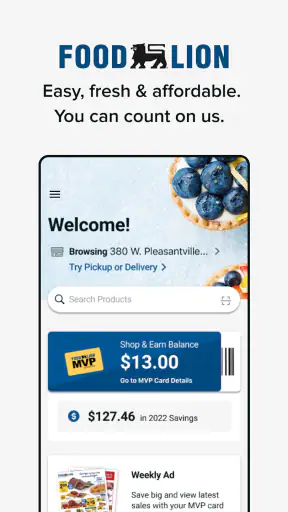
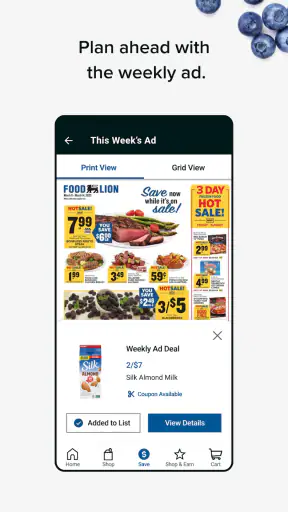
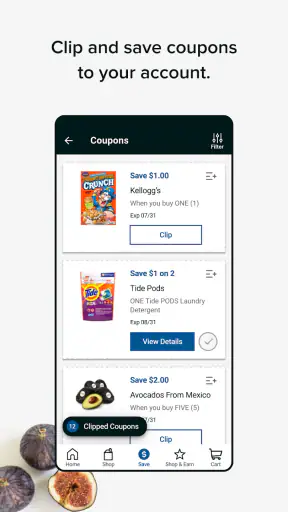
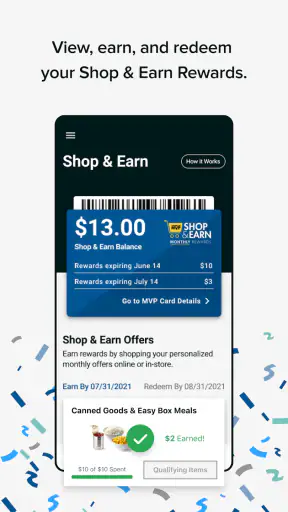
Food shopping is one of those errands where a small amount of preparation can save a surprising amount of time. I found Food Lion most useful when I treated it as a planning companion rather than simply a digital version of a store flyer. It is a free shopping app from Food Lion, LLC, aimed at making a regular trip easier to organize, compare, and complete. The app is rated for Everyone, so it is approachable for households where more than one person helps manage the grocery list.
My overall impression is practical rather than flashy. Food Lion is built around the needs of people who already shop at Food Lion and want a more convenient way to handle that routine. It makes the most sense when you want to prepare before leaving home, check your choices while shopping, and reduce the amount of mental arithmetic involved in a weekly grocery run. If you rarely visit Food Lion, its usefulness naturally drops because the experience is tied closely to that retailer.
How Food Lion feels during a real shopping trip
Speed expectations before leaving home
The most important performance question is not whether a shopping app looks impressive, but whether it gets out of the way. In my experience, Food Lion feels best when I open it with a clear task: preparing a list, checking what I need, or organizing a trip. That focused approach matters because grocery planning often happens in short gaps, such as while drinking coffee or before heading out after work.
I would not approach it as a replacement for every grocery tool on my phone. A general notes app can be faster for writing a completely free-form list, while a broad comparison-shopping service may be more useful if I want to search several retailers at once. Food Lion earns its place when the shopping trip is specifically connected to Food Lion and I want retailer-focused information rather than a blank checklist.
The app has been available since January 11, 2017, and its current version is 9.3.1. That history gives it the feel of an established shopping companion rather than a newly released experiment. It has also reached over a million installs, with an average rating of 4.4 from around 40 thousand ratings. Those figures suggest that many shoppers find the basic experience worthwhile, although they should not be mistaken for a guarantee that every device or shopping routine will feel identical.
When I plan a larger trip, I prefer opening Food Lion before I am standing in a crowded aisle. That simple habit improves the experience because I can make decisions while I have time to think. It also avoids turning the store visit into a series of rushed searches. The best speed improvement comes from preparing the list before the trip, not from expecting the app to solve every decision at the shelf.
What happens during heavier use
A quick visit is one thing; a large weekly shop is another. Heavy use usually means moving between several parts of the app, checking many items, adjusting a list, and possibly looking at shopping information while the phone is being handled repeatedly. That is where a retailer app has to prove its value, because a minor delay repeated throughout a trip becomes noticeable.
For a smaller errand, I would keep the workflow deliberately narrow. I might open the app, confirm the few items I need, and close it once I am done. For a full household shop, I would divide the preparation into groups such as breakfast items, produce, pantry goods, and household supplies. This is not just tidier; it makes it easier to notice omissions before leaving home and reduces the temptation to wander through the app without a plan.
One useful trade-off is that a retailer-specific app can make a store visit more focused than a generic list, but it can also feel less flexible. A notes app lets me write anything in any format, including reminders unrelated to shopping. Food Lion is more valuable when I want my grocery planning to stay connected to the retailer. If my list includes a prescription reminder, a hardware item, and a message for a family member, I would rather use a general organizer alongside it.
Another realistic heavy-use situation is shopping for someone else. A parent may send me a long list, or I may be buying groceries for a household member with specific preferences. In that case, I would review the complete list before entering the store and mark uncertain items for a second look. The app can support that preparation, but it does not remove the need to make substitutions or ask questions when the exact product is unavailable.
I also recommend avoiding last-second list construction in a poor connection area. A shopping app is most comfortable when the phone can load what I need without interruption. If I already know the trip will take place somewhere with unreliable connectivity, I would keep a backup note or screenshot of the essential list. That is a sensible recovery habit for any digital shopping workflow, especially when the list is important.
Reliability and recovering from interruptions
Reliability is more than an app opening successfully. For me, it includes whether I can return to a task after the phone receives a call, the screen locks, or I move between planning and shopping. Food Lion works best when I treat it as part of a routine: prepare the list, check it before departure, and use it as a reference rather than constantly rebuilding the plan in the aisle.
Retailer apps can be affected by conditions outside the app itself, including connection quality and changes in store information. I would therefore avoid relying on a single screen as my only record of what I need. The safest approach is to keep the essential items visible in the app and maintain a simple backup for anything urgent. That is not a criticism unique to Food Lion; it is a sensible precaution whenever a phone becomes part of an important errand.
If the app appears slow or an action does not respond immediately, I would first check whether the phone is busy with other tasks, then retry rather than tapping repeatedly. Repeated taps can create confusion if the first action actually completed. Closing and reopening the app is also a reasonable recovery step when a session feels stuck. I prefer this calm approach to assuming that a missing response means my list or selection has disappeared.
The app’s 11 thousand reviews show that people have taken the time to describe their experiences, while the broader rating picture remains positive. I read that as evidence of a useful everyday tool with room for individual variation, not as proof of perfect reliability. A shopping app can be perfectly adequate for planning and still frustrate someone who expects it to behave like a full general-purpose productivity suite.
Device constraints and everyday comfort
Food Lion supports devices running iOS 8.1 or later, which gives it a broad compatibility range across older Apple hardware. That is helpful for shoppers who keep an older phone as their everyday device rather than upgrading frequently. At the same time, compatibility is not the same as identical performance. An older phone may open the app and still feel less responsive when several tasks are happening in the background.
I would also consider the condition of the phone itself. Available storage, battery health, background activity, and connection quality can all affect how comfortable a shopping app feels. None of those factors is specific to Food Lion, but they matter during a trip because the phone may already be handling navigation, messages, payment tools, or a family member’s call.
For that reason, I prefer entering the store with the phone charged and the shopping plan already prepared. This reduces the time spent with the screen awake and avoids making the app carry the entire burden of planning while I am moving through the aisles. It also makes Food Lion feel lighter in daily use because I am asking it to provide focused assistance rather than repeatedly searching from scratch.
The Everyone age rating is another practical advantage for shared household use. A teenager helping with groceries can understand the basic purpose without needing a specialized account or a complicated explanation. I would still decide who manages the final list, because shared shopping can become confusing when several people change instructions at once. The app may help coordinate the errand, but a clear household routine remains important.
Where it beats ordinary alternatives
Compared with a paper list, Food Lion is easier to revise when plans change. I can correct an item before leaving instead of crossing out a line or rewriting the page. Compared with a basic notes app, it is more relevant when I want a shopping experience centered on Food Lion rather than a completely open text field. Compared with a multi-store grocery service, it is the more natural choice for someone whose regular trip already begins and ends with Food Lion.
Those comparisons also reveal its limits. Paper is dependable, visible, and unaffected by battery life. A notes app is flexible and can combine grocery reminders with unrelated tasks. A broader grocery platform may suit a shopper who compares several retailers or wants one place for purchases from different stores. I would choose Food Lion when retailer focus is an advantage, not because it replaces every alternative.
A useful workflow is to use a general household note for recurring needs and Food Lion for the actual store trip. For example, the household note can hold reminders such as “check lunch supplies” or “ask about weekend guests,” while the Food Lion list contains the items I intend to buy there. This division keeps the retailer app from becoming cluttered with information that does not belong to the shopping run.
I also see value for people who dislike impulse shopping. Preparing the trip in advance gives me a reason to stay focused, especially when I am tired after work. It will not prevent every unplanned purchase, but it changes the experience from browsing without direction to checking a deliberate list. That is a modest benefit, yet it is exactly the kind of benefit that can make a routine errand feel less tiring.
Who should use it, and who should skip it?
Food Lion is a strong fit for regular Food Lion shoppers who want a free digital aid for planning their trips. It is particularly suitable for households that repeat similar grocery patterns, people who want to prepare before entering the store, and shoppers using an older compatible iPhone. It can also help someone who shares responsibility for groceries and wants a more structured routine than a loose message thread.
I would skip it if I do not shop at Food Lion often enough to justify a retailer-specific tool. I would also choose something else if my main goal is comparing several supermarkets, managing a broad household task system, or keeping a highly customized list with notes unrelated to food. In those situations, a general list manager or multi-store service may be less restrictive.
People who expect every product decision to be handled automatically should keep their expectations realistic. The app can support the shopping process, but I still need to decide quantities, judge substitutions, and adapt when a preferred item is not available. That human part of grocery shopping remains important, particularly for fresh food and household purchases where personal preferences matter.
A realistic weekly scenario
Imagine I am leaving work and need to shop for the next few days. Instead of opening Food Lion at the entrance and trying to remember everything, I prepare the list earlier in the day. I group the essentials mentally, check the list once before leaving, and keep a short backup note for the items that would be most inconvenient to forget.
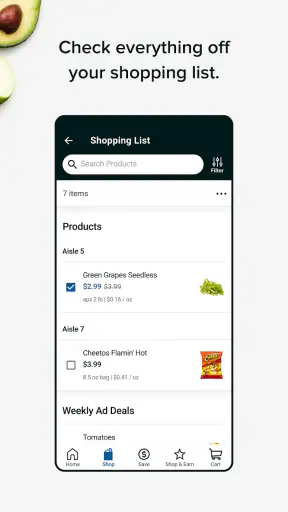
At the store, I use the app as a reference rather than a source of constant entertainment. I check items off as I go, pause when I need to make a substitution, and avoid rebuilding the entire list because one product is unavailable. If the phone receives a call, I return to the list afterward and continue from the last item I remember handling. This workflow is simple, but it reduces the two biggest grocery frustrations: forgetting essentials and losing track of what has already been picked up.
For a larger family shop, I would prepare the list with another household member before leaving. We could divide the responsibility by section, but I would make sure both people understand which items are essential and which are optional. That small clarification prevents the app from becoming a source of duplicated purchases. The tool helps organize the information; the household still needs an agreed plan.
My performance verdict
Food Lion feels most successful when it is used as a focused companion to a Food Lion shopping trip. Its established presence, broad older-device support, and strong average rating make it a reasonable choice for shoppers who want a retailer-specific tool without paying for it. The free price removes the main barrier to trying it, and the Everyone rating makes it suitable for shared household errands.
My main reservation is not about a missing headline feature; it is about fit. A retailer app cannot be as universal as a blank notes app, and it is not the best answer for someone comparing multiple stores. Its performance also depends partly on the phone, connection, and preparation habits around it. If I open it only after entering the store with no plan, the experience is less helpful than it could be.
The practical verdict is straightforward: Food Lion is worth trying if Food Lion is already part of your regular grocery routine. I would prepare the list ahead of time, keep a backup for urgent items, and use a general notes tool for reminders that do not belong to the shopping trip. Used that way, the app stays focused, reduces avoidable friction, and supports a calmer errand without pretending to replace personal judgment.
After spending time with it, I would recommend it to a friend who shops at Food Lion consistently and wants a free, retailer-centered way to organize grocery trips. I would not recommend installing it solely because it is a shopping app; the value comes from the connection to this particular store. For the right shopper, that focused design is its biggest strength.


